The Right Way to Promote Your ISO Certification
Once you’ve reached your ISO 9001 Certification you should feel proud for accomplishing something great and promote your ISO 9001 certification. But first, ISO has strict rules so make sure you read the rules and regulations before you can advertise your ISO 9001 certification.
Advertising your ISO 9001 certification
None of the restrictions ISO has placed on the portrayal of your certification should stop you from promoting it. If you have done ISO certification largely yourself the (mission of this site is to help you with that), you can use that “do it yourself” approach with promotion as well. Our partner, Federal Flags, provides the following self-promotion ISO certification tools using ISO acceptable identity standards so you can advertise your ISO 9001 certification:
- High visibility, long-lasting high-strength flags that you can proudly fly outside your facilities, warehouses, offices and any building or venue/event
- Banners with properly formatted logos that can be added to buildings, displays, indoors for plant tours, anywhere you wish to announce your certification smartly
- Decals that travel on company vehicles, shipping containers, loading/unloading conveyances, even production equipment (resists sun fading and attention-demanding gloss finishes)
- Highly versatile logo “artwork” in electronic form to use as you need to on media releases, on promotional or specialty items (i.e. “giveaways”), in ads and on brochures
But you must follow the rules to properly promote your ISO 9001 certification
ISO allows you to promote your registration on your facility, in your promotional materials and even on your delivery trucks as long as certain guidelines are followed. But since there is no specific ISO certification logo, you must either create your own, append it to your existing logo or perhaps use a third party created one. We want to help you understand the rules and regulations before you promote your ISO 9001 certification.
Here is a quick quiz: Which of these could land you in hot water with ISO?
A. Advertising that your products are “ISO certified”
B. Announcing your company is “ISO 9000 Registered”
C. Noting in your annual report that your company is “ISO 9001:2015” registered, when you are owned by a holding company that provides no products or services itself
Actually, all three would be in violation of ISO’s guidelines on promoting various forms of ISO certification. Here is why:
 A. ISO certification does not apply to specific products. In fact, the only thing you can say about a product is that the management system used by the company producing the product was certified. If you think that won’t fit on your product package, you’re probably doing yourself a favor since a reading of the stipulations implies that even noting certification on the product package can be misleading to consumers. It does allow you to make reference to your certification by process only. Correct examples might be:
“ISO 9001:2015-certified quality management system”, or “ISO 14001:2015-certified environmental management system.”
“ISO 9001:2015 QMS”, or “ISO 14001:2015 EMS”
B. In fact, there is no such thing as “ISO 9000 Registered” because ISO 9000 is a guidance document. ISO 9001 defines the requirements. When advertising it must be referred to by the correct designations such as above (e.g., ISO 9001:2015)
C. ISO wants you to be specific about the “scope” of your certification. If your entire company has been ISO certified, then you may say so. However, if only one unit or operating division has, then that claim cannot be made. There are many other nuances that you may want to look up in the ISO publication on the subject (for instance the difference between certification and registration, and why you should never use the term “accreditation.”), but there are some correct methods and tools for promoting your ISO achievements.
Safe ISO Marketing
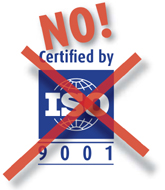 So here are some “ISO marketing safety tips” you can abide by to keep your ISO registration in good standing:
- Do not claim ISO certification for another part of your company that has not been certified
- You cannot really use the ISO logo, nor can you change it in any way and then use it for an endorsement
- Use the complete name of the standard that you are certified to such as ISO 9001:2015, not just ” ISO 9001″
- You can’t claim you are ISO “accredited,” as there really is no such thing
- You cannot put any type of logo or other implied ISO endorsement on a product or product package and can’t imply a product carries any type of ISO certification (ISO certifies a process, not the output of that process.)
Bottom line: Advertising your ISO 9001 certification is an important marketing tool but use it correctly in order not to endanger your ability to promote it in the future.
MAKE ISO 9001 REGISTRATION SIMPLE AND FOOLPROOF!
Our All-in-One Certification Package is a proven, efficient system. It gives you all you need to prepare for registration – in one simple to use package.