

Comparison Between ISO 9001:2015 to ISO 9001:2026
Clause by Clause Comparison
| ISO 9001:2015 | ISO 9001:2026 |
| 4 Context of the organization | 4 Context of the organization |
| 4.1 Understanding the organization and its context | 4.1 Understanding the organization and its context |
| 4.2 Understanding the needs and expectations of interested parties | 4.2 Understanding the needs and expectations of interested parties |
| 4.3 Determining the scope of the quality management system | 4.3 Determining the scope of the quality management system |
| 4.4 Quality management system and its processes | 4.4 Quality management system |
| 4.4.1 Establish, implement, maintain and continually improve | 4.4.1 Establish, implement, maintain and continually improve |
| 4.4.2 Maintain documented information | 4.4.2 Documented information shall be available |
| 5 Leadership | 5 Leadership |
| 5.1 Leadership and commitment | 5.1 Leadership and commitment |
| 5.1.1 General | 5.1.1 General |
| 5.1.2 Customer focus | 5.1.2 Customer focus |
| 5.2 Policy | 5.2 Quality policy |
| 5.2.1 Establishing the quality policy | 5.2.1 Establishing the quality policy |
| 5.2.2 Communicating the quality policy | 5.2.2 Communicating the quality policy |
| 5.3 Organizational roles, responsibilities and authorities | 5.3 Roles, responsibilities and authorities |
| 6 Planning | 6 Planning |
| 6.1 Actions to address risks and opportunities | 6.1 Actions to address risks and opportunities |
| 6.1.1 Consider issues of 4.1 and requirements of 4.2 | 6.1.1 Determining risks and opportunities |
| 6.1.2 Actions to address risks and opportunities | 6.1.2 Actions to address risks |
| 6.1.3 Actions to address opportunities | |
| 6.2 Quality objectives and planning to achieve them | 6.2 Quality objectives and planning to achieve them |
| 6.2.1 Quality objectives at relevant functions | 6.2.1 Quality objectives at relevant functions |
| 6.2.2 Determine what, who, when, how | 6.2.2 Determine what, who, when, how |
| 6.3 Planning of changes | 6.3 Planning of changes |
| 7 Support | 7 Support |
| 7.1 Resources | 7.1 Resources |
| 7.1.1 General | 7.1.1 General |
| 7.1.2 People | 7.1.2 People |
| 7.1.3 Infrastructure | 7.1.3 Infrastructure |
| 7.1.4 Environment for the operation of processes | 7.1.4 Environment for the operation of processes |
| 7.1.5 Monitoring and measuring resources | 7.1.5 Monitoring and measuring resources |
| 7.1.5.1 General | 7.1.5.1 General |
| 7.1.5.2 Measurement traceability | 7.1.5.2 Traceability of measurement results |
| 7.1.6 Organizational knowledge | 7.1.6 Organizational knowledge |
| 7.2 Competence | 7.2 Competence |
| 7.3 Awareness | 7.3 Awareness |
| 7.4 Communication | 7.4 Communication |
| 7.5 Documented information | 7.5 Documented information |
| 7.5.1 General | 7.5.1 General |
| 7.5.2 Creating and updating | 7.5.2 Creating and updating documented information |
| 7.5.3 Control of documented information | 7.5.3 Control of documented Information |
| 7.5.3.1 Documented information controlled | 7.5.3.1 Documented information available, protected |
| 7.5.3.2 Activities for control of documented information | 7.5.3.2 Activities for control of documented information |
| 8 Operation | 8 Operation |
| 8.1 Operational planning and control | 8.1 Operational planning and control |
| 8.2 Requirements for products and services | 8.2 Requirements for products and services |
| 8.2.1 Customer communication | 8.2.1 Customer communication |
| 8.2.2 Determining the requirements for products and services | 8.2.2 Determining the requirements for products and services |
| 8.2.3 Review of the requirements for products and services | 8.2.3 Review of the requirements for products and services |
| 8.2.3.1 Ensure ability to meet requirements | 8.2.3.1 Ensure ability to meet requirements |
| 8.2.3.2 Retain documented information | 8.2.3.2 Documented information shall be available |
| 8.2.4 Changes to requirements for products and services | 8.2.4 Changes to requirements for products and services |
| 8.3 Design and development of products and services | 8.3 Design and development of products and services |
| 8.3.1 General | 8.3.1 General |
| 8.3.2 Design and development planning | 8.3.2 Design and development planning |
| 8.3.3 Design and development Inputs | 8.3.3 Design and development Inputs |
| 8.3.4 Design and development controls | 8.3.4 Design and development controls |
| 8.3.5 Design and development outputs | 8.3.5 Design and development outputs |
| 8.3.6 Design and development changes | 8.3.6 Design and development changes |
| 8.4 Control of externally provided processes, products and services | 8.4 Control of externally provided processes, products and services |
| 8.4.1 General | 8.4.1 General |
| 8.4.2 Type and extent of control | 8.4.2 Type and extent of control |
| 8.4.3 Information for external providers | 8.4.3 Information for external providers |
| 8.5 Production and service provision | 8.5 Production and service provision |
| 8.5.1 Control of production and service provision | 8.5.1 Control of production and service provision |
| 8.5.2 Identification and traceability | 8.5.2 Identification and traceability |
| 8.5.3 Property belonging to customers or external providers | 8.5.3 Property belonging to customers or external providers |
| 8.5.4 Preservation | 8.5.4 Preservation |
| 8.5.5 Post-delivery activities | 8.5.5 Post-delivery activities |
| 8.5.6 Control of changes | 8.5.6 Control of changes |
| 8.6 Release of products and services | 8.6 Release of products and services |
| 8.7 Control of nonconforming outputs | 8.7 Control of nonconforming outputs |
| 8.7.1 Ensure nonconformed outputs are identified and controlled | 8.7.1 Ensure nonconformed outputs are identified and controlled |
| 8.7.2 Retain documented information | 8.7.2 Documented information shall be available as evidence |
| 9 Performance evaluation | 9 Performance evaluation |
| 9.1 Monitoring, measurement, analysis and evaluation | 9.1 Monitoring, measurement, analysis and evaluation |
| 9.1.1 General | 9.1.1 General |
| 9.1.2 Customer satisfaction | 9.1.2 Customer satisfaction |
| 9.1.3 Analysis and evaluation | 9.1.3 Analysis and evaluation |
| 9.2 Internal audit | 9.2 Internal audit |
| 9.2.1 Conduct internal audits at planned intervals | 9.2.1 General |
| 9.2.2 Plan, establish, implement and maintain audit program | 9.2.2 Internal audit programme |
| 9.3 Management review | 9.3 Management review |
| 9.3.1 General | 9.3.1 General |
| 9.3.2 Management review inputs | 9.3.2 Management review inputs |
| 9.3.3 Management review outputs | 9.3.3 Management review results |
| 10 Improvement | 10 Improvement |
| 10.1 General | 10.1 Continual improvement |
| 10.2 Nonconformity and corrective action | 10.2 Nonconformity and corrective action |
| 10.2.1 When a nonconformity occurs | 10.2.1 When a nonconformity occurs |
| 10.2.2 Retain documented information of nonconformity | 10.2.2 Documented information shall be available as evidence |
| 10.3 Continual Improvement |
Compare ISO 9001:2015 to ISO 9001:2026
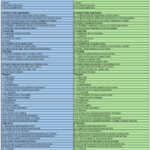
ISO 9001:2015 to ISO 9001:2026 Comparison Chart
We offer an ISO 9001:2026 Gap Checklist to map out which areas of your current Quality Management System (QMS) need improvement in order to meet ISO 9001:2026 requirements.